SCI期刊目录
GRAPHICAL MODELS
GRAPHICAL MODELS英文简介
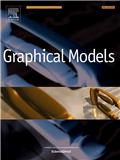
Graphical Models is recognized internationally as a highly rated, top tier journal and is focused on the creation, geometric processing, animation, and visualization of graphical models and on their applications in engineering, science, culture, and entertainment. GMOD provides its readers with thoroughly reviewed and carefully selected papers that disseminate exciting innovations, that teach rigorous theoretical foundations, that propose robust and efficient solutions, or that describe ambitious systems or applications in a variety of topics.We invite papers in five categories: research (contributions of novel theoretical or practical approaches or solutions), survey (opinionated views of the state-of-the-art and challenges in a specific topic), system (the architecture and implementation details of an innovative architecture for a complete system that supports model/animation design, acquisition, analysis, visualization…), application (description of a novel application of know techniques and evaluation of its impact), or lecture (an elegant and inspiring perspective on previously published results that clarifies them and teaches them in a new way).GMOD offers its authors an accelerated review, feedback from experts in the field, immediate online publication of accepted papers, no restriction on color and length (when justified by the content) in the online version, and a broad promotion of published papers. A prestigious group of editors selected from among the premier international researchers in their fields oversees the review process.Because timely publication of research results is important for the careers of our authors and for the vitality of the field, GMOD is putting in place its R3 (Rapid Response Review) system, which strives to provide authors with a preliminary decision within an average of one month after submission.The following are examples of topics typically covered in GMOD:Shape Processing: Analysis of local properties. Averaging and relative convex hulls. Correspondence, registration, matching and retrieval. Detection of ridges, features, patterns, and symmetries. Measures of volume, compactness, or convexity. Morphological operations (offsetting, rounding, tightening). Segmentation. Similarity measures, comparison, variability statistics.Points: Analysis. Interpolation. Multi-resolution. Rendering. Segmentation. Separation.Curves: Parametric. Implicit. Fitting. Smoothing, Subdivision. Constant length. Extraction. Segmentation. Matching. Comparison. Averaging. Curves on surfaces. Rounding, Offsetting, Regularity.Skeletons: Animation and Skinning. Medial axis or curve skeleton (construction, approximation, properties)Meshes: Compact data structures. Feature extraction and replication. Feature exaggeration. Levels of Detail. Simplification. Shape measures. Parameterization. Re-sampling. Smoothing. Subdivision. Volume/area preservation. Feature sharpening.Surfaces: Implicit. Parametric. Curvature. Hole filling. Geodesics. Intersection. Interpolating. Reconstruction. Sampling.Solids: Boolean operations. Boundary representations. CSG. BSP. Non-manifold models. Inhomogeneous models. Non-manifold models and complexes. Offsets. Reconstruction from drawings, images, videos. Repair. Rounding and smoothing. Sweeps.Volumes/Images/Video: Matching. Searching. Filtering. Compression. Segmentation. Stitching. Merging. In-painting. Isosurfaces. Rendering.Design: Constraint-based. Feature-based. Variational. Direct manipulation. Haptics. Multimodal interfaces. Multiuser interfaces. Pen-based Procedural models and patterns.Motion: Rigid, affine, steady. Analysis. Capture. Pattern extraction. Synthesis. Constrained. Blending.Morphing: Curves. Graphs. Images. Volumes. Meshes. Solids. Surfaces. In-betweening.Deformation: Capture/acquisition. Direct manipulation. Free-form,. Image/volume warping. Interpolating meshes. Preservation of local details.Animation: Design. Evaluation. Behavioral. Retargeting. Data driven. Humans. Animals. Face. Hand. Gate. Swimming. Constrained. Preserving volume, area, or length. Optimization.Simulation: Collision and friction. Articulated and flexible shapes. Physically based behavior. Cloth. Crowds and flocks. Deposition, erosion, and biological growth. Fluid. Hair. Viscoelastic deformations. Sound.Rendering: Illustrative (non-photorealistic). Image-based. Artistic. Global Illumination. Occlusion. Perception. Perspective. Acceleration of radiosity./raytracing. Reflectance and Shading Models. Relighting. Silhouettes. Shadows. Texture Mapping. Visibility.Hardware Acceleration: Collision and visibility queries. Frame buffer algorithms. GPUs and parallelization. Model Acquisition and Scanning. Ray Casting/Tracing Hardware.Model Dissemination: Shared models. Collaborative access. Geometry compression. Progressive/selective refinements. Streaming scenes and animations. Watermarking.Tool: Artificial intelligence. Computational geometry. Data structures. Differential geometry. Genetic algorithms. Linear algebra . Machine learning. Mathematical morphology. Numerical accuracy. Numerical analysis. Optimization. Signal Processing. Topology. Wavelets.Application: Manufacturing. Robotics. Architecture and urban simulation. Medicine. Biology. Natural phenomena. Cinema. Videogames. Education. Cultural Heritage. Typography. Scientific Computing.
GRAPHICAL MODELS中文简介
图形模型被国际公认为一种高评价的顶级期刊,其重点是图形模型的创建、几何处理、动画和可视化,以及其在工程、科学、文化和娱乐中的应用。GMOD为读者提供了经过彻底审查和精心挑选的论文,这些论文传播了令人兴奋的创新,教授了严格的理论基础,提出了强有力和高效的解决方案,或描述了各种主题中雄心勃勃的系统或应用程序。我们邀请五类论文:研究(新理论或实践方法或解决方案的贡献)、调查(对最新技术的观点和特定主题的挑战)、系统(支持模型/动画设计的完整系统的创新架构的架构和实施细节,获取、分析、可视化、应用(对所知技术的新应用的描述和对其影响的评估)或讲座(对先前发布的结果的优雅和鼓舞人心的观点,澄清这些结果并以新的方式教授它们)。GMOD为其作者提供了一个加速审查、来自该领域专家的反馈、立即在线出版已接受的论文、在线版本中不限制颜色和长度(当内容合理时),以及广泛推广已发表的论文。一个著名的编辑小组从各自领域的顶尖国际研究人员中选出,负责监督审查过程。由于及时公布研究结果对作者的职业生涯和该领域的活力至关重要,GMOD正在建立其R3(快速反应审查)系统,力求在提交后平均一个月内为作者提供初步决定。以下是GMOD中通常涉及的主题示例:形状处理:局部特性分析。平均值和相对凸壳。通信、登记、匹配和检索。检测脊线、特征、图案和对称性。体积、紧密度或凸度的度量。形态操作(偏移、舍入、收紧)。分割。相似性度量、比较、变异性统计。要点:分析。内插法。多分辨率。致使。分割。分离。曲线:参数化。隐性的。适合的。平滑、细分。恒定长度。提取。分割。匹配。比较。平均化。曲面上的曲线。舍入、偏移、规则性。骨架:动画和蒙皮。中轴线或曲线骨架(构造、近似、属性)网格:压缩数据结构。特征提取和复制。特征夸张。细节层次。简化。形状度量。参数化。再采样。平滑的。细分。体积/面积保护。特征锐化。表面:隐式曲面。参量。弯曲。灌浆孔。测地线。交集。内插。重建。抽样。固体:布尔操作。边界表示。CSG。BSP。非流形模型。非均匀模型。非流形模型和配合物。偏移量。从楼重建,图片,视频。修复。舍入和平滑。扫描。卷/图像/视频:匹配。搜索。过滤。压缩。分割。缝合。合并。内画。等值面。渲染。设计:基于约束。基于特征的。 变异的。直接操作。触觉。多式联运接口。多用户界面。笔型模式和程序模式。运动:刚性,仿射,稳态。分析。捕获。提取模式。合成。约束。混合。变形:曲线。图表。图像。卷。网格。固体。表面。中间。变形:捕获/收购。直接操纵。自由形式。图像/体积变形。插值网格。保存当地细节。动画设计。评价。行为。重定向。数据驱动的。人类。动物。的脸。手。门。游泳。约束。保量、面积或长度。优化。仿真:碰撞和摩擦。铰接和灵活的形状。基于身体的行为。布。人群和羊群。沉积,侵蚀和生物生长。流体。头发。粘弹性变形。声音。渲染:说明性(非真实感)。基于图像的。艺术的。全球照明。闭塞。知觉。透视。辐射率的加速度。光线追踪反射和阴影模型。重燃。剪影。阴影。纹理映射。能见度。硬件加速:碰撞的查询和可视性。帧缓冲区算法。gpus和并行化。模型的采集和成像。光线投射/跟踪的硬件。模型传播:共享模型。协作访问。几何压缩。渐进/选择性改进。流媒体场景和动画。水印。工具:人工智能。计算几何。数据结构。微分几何。遗传算法。线性代数。机器学习。数学形态学。数值精度。数值分析。优化。信号处理。拓扑。小波。应用:制造业。机器人。建筑与城市模拟。医学。生物学。自然现象。电影。视频游戏。教育。文化遗产。印刷术。科学计算。
GRAPHICAL MODELS中科院分区
| 大类学科 | 分区 | 小类学科 | 分区 | Top期刊 | 综述期刊 |
| 计算机科学 | 4区 | COMPUTER SCIENCE, SOFTWARE ENGINEERING 计算机:软件工程 | 4区 | 否 | 否 |
GRAPHICAL MODELSJCR分区
| JCR分区等级 | JCR所属学科 | 分区 | 影响因子 |
| Q4 | COMPUTER SCIENCE, SOFTWARE ENGINEERING | Q4 | 1.094 |
热门服务 全程指导,100%成功保障,最大限度节省科研人员时间,限时秒杀中……
SCI/SSCI/EI全程指导
专业选刊推荐与投稿全程指导
南核/北核全程指导
根据研究方向推荐合适期刊
知网/万方/维普/龙源指导
专业学术文章翻译与校对
翻译/润色服务
英美母语专家润色提升论文质量,专业学术文章翻译与校对
本硕毕业大论文指导
一对一导师全程指导
学术著作出版
专业学术著作出版服务
中国专服务利
中国发明专利、实用新型专利
国际专利服务
科研数据分析与可视化
专业服务顾问